Route Optimisation
Employee transport routing is a planning problem that brings together demand, locations, arrival requirements, capacity, policies and real operating constraints to create viable journey plans.
In brief
Employee transport route optimisation uses structured demand, timing, locations, capacity and operating constraints to create viable journey plans. It is not simply about choosing the shortest path; the plan must also work for the people travelling, the vehicle capacity available and the operating rules of the programme.
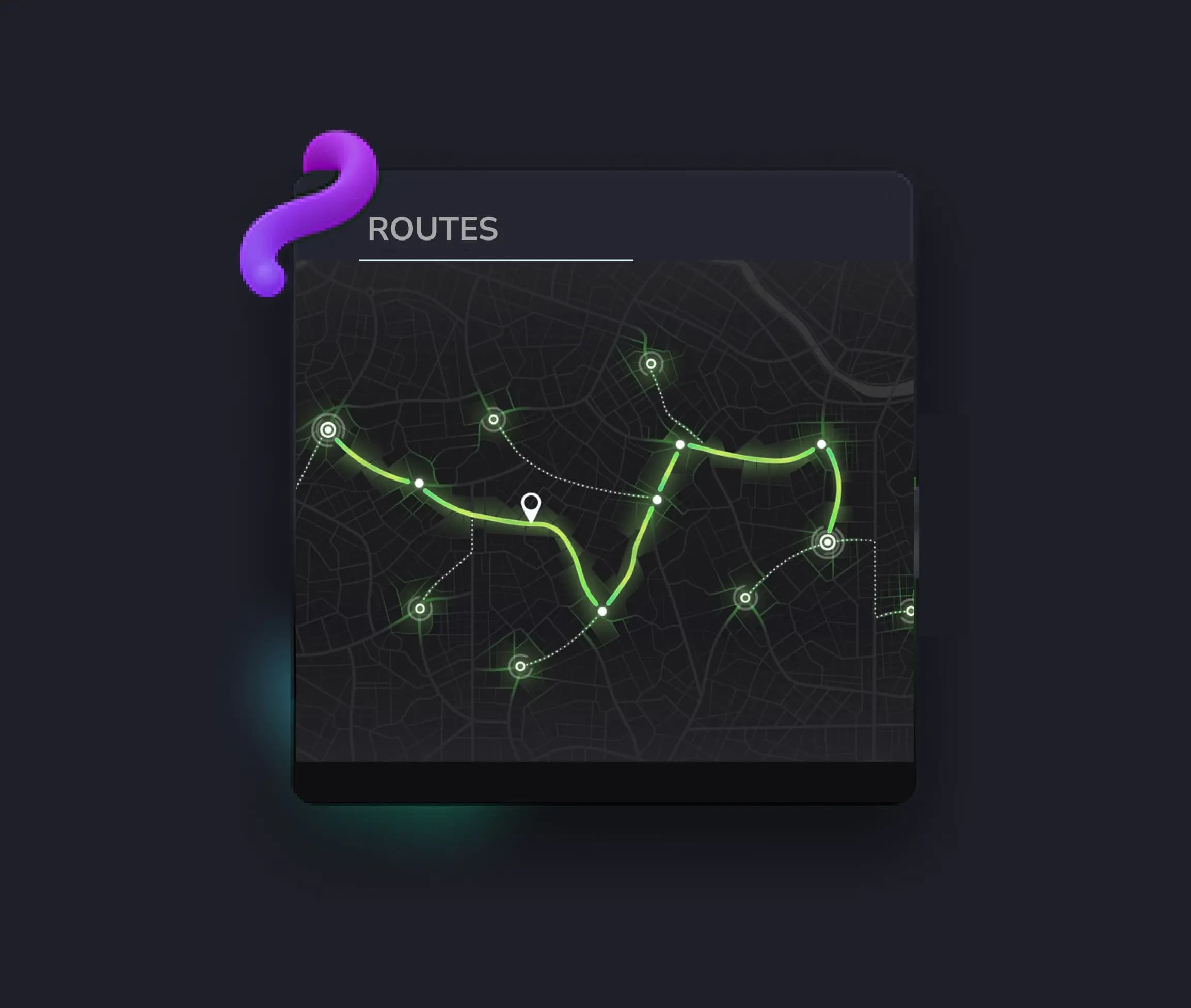

A demand-first route plan.
- 01
Structure demand
Bring together travel needs, shift times, origins, destinations and relevant service rules before route planning begins.
- 02
Compatible groups
Identify demand that can reasonably travel together based on timing, location, arrival requirements and service rules before building a route.
- 03
Select capacity
Match vehicle capacity and transport supply to the compatible group, duty requirements and operating context.
- 04
Sequence the journey
Balance stop order, arrival requirements, travel time, traffic and service policies to create a viable route plan.
- 05
Review the operation
Use exceptions and changing demand to improve rather than freeze route plans.
In depth
Routing begins before the map
A route can only be as useful as the demand and policy context behind it. Planning needs to understand who needs to travel, when they must arrive, where they are travelling from and which service rules apply.
Starting with a map or vehicle list alone can hide the conditions that make a journey viable, safe and appropriate for the workplace programme.
Capacity is part of the decision
A route is not only a sequence of stops. It is also a capacity decision. The appropriate supply should reflect the compatible group, duty requirements and operating constraints rather than an assumed vehicle allocation.
Right-sizing is an operating objective, not a promise of a particular saving or sustainability outcome. Those outcomes require programme-specific evidence.
Plans need a learning loop
Attendance, shifts, locations and conditions change. Good mobility operations use completed journey records and exceptions to review future plans.
Technology can help make these inputs visible, while people remain responsible for the policies and operational decisions that shape the service.
Questions and answers
Does route optimisation only minimise distance?
No. Employee transport plans must also account for demand, arrival requirements, capacity, policies and operational constraints.