Demand and Rostering
Demand and roster context provide the planning signal for understanding who needs to travel, when, where and under what programme rules.
In brief
Demand, rostering and scheduling organise employee travel requirements, locations, timings and policy context before routes, capacity and transport supply are planned.
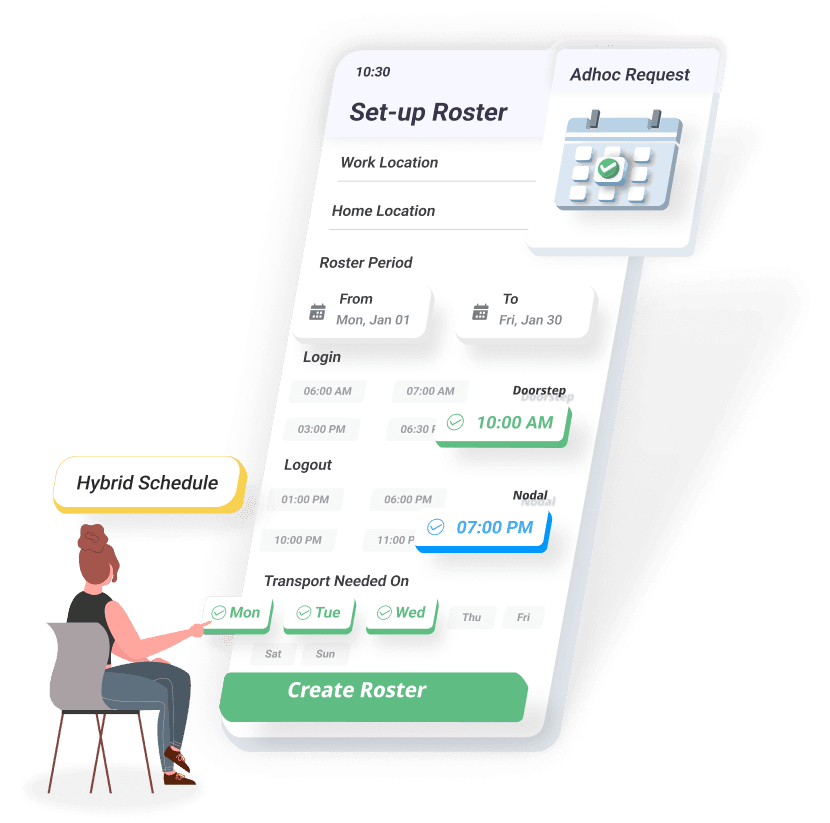

The planning signal.
- 01
Capture demand
Capture the people, locations, shifts and journey requirements that shape employee transport demand.
- 02
Apply eligibility
Apply programme policies, eligibility rules and service requirements before demand is translated into routes and capacity.
- 03
Create rosters
Turn changing travel needs, shifts and attendance requirements into a usable operating roster.
- 04
Prepare planning
Provide the planning input needed for demand grouping, route optimisation, capacity and supply decisions.
In depth
Demand comes before deployment
Without a clear view of who needs to travel, when and under what conditions, route and fleet decisions are based on assumptions.
Rostering creates the planning signal that lets teams organise travel before they allocate a vehicle.
A live operating input
Workplace demand can change with attendance, shifts, sites and programme rules.
The objective is not to freeze a perfect roster, but to make change visible and manageable.
Questions and answers
Why does rostering matter in employee transport?
It provides the demand and policy context needed to plan compatible routes, capacity and operating supply.